

Ah, the wild world of digital marketing for small businesses. It’s a space bursting with potential, a genuine goldmine of customer connections just waiting to be tapped. But let’s be real: it can just as easily feel like a minefield. You’re focused on growing your business, not becoming a full-time marketing expert, yet there’s constant pressure to “be online” and “do digital.” The result? Far too often, time gets wasted, effort gets scattered, and, most painfully, budgets get drained.
Many small businesses jump in with the right intentions but without a clear roadmap, leading to common mistakes that siphon resources faster than a leaky faucet. The good news is that these pitfalls are entirely avoidable, especially when you partner with the right digital marketing experts. It’s not about doing more marketing, it’s about doing smarter marketing.
Tactical Errors
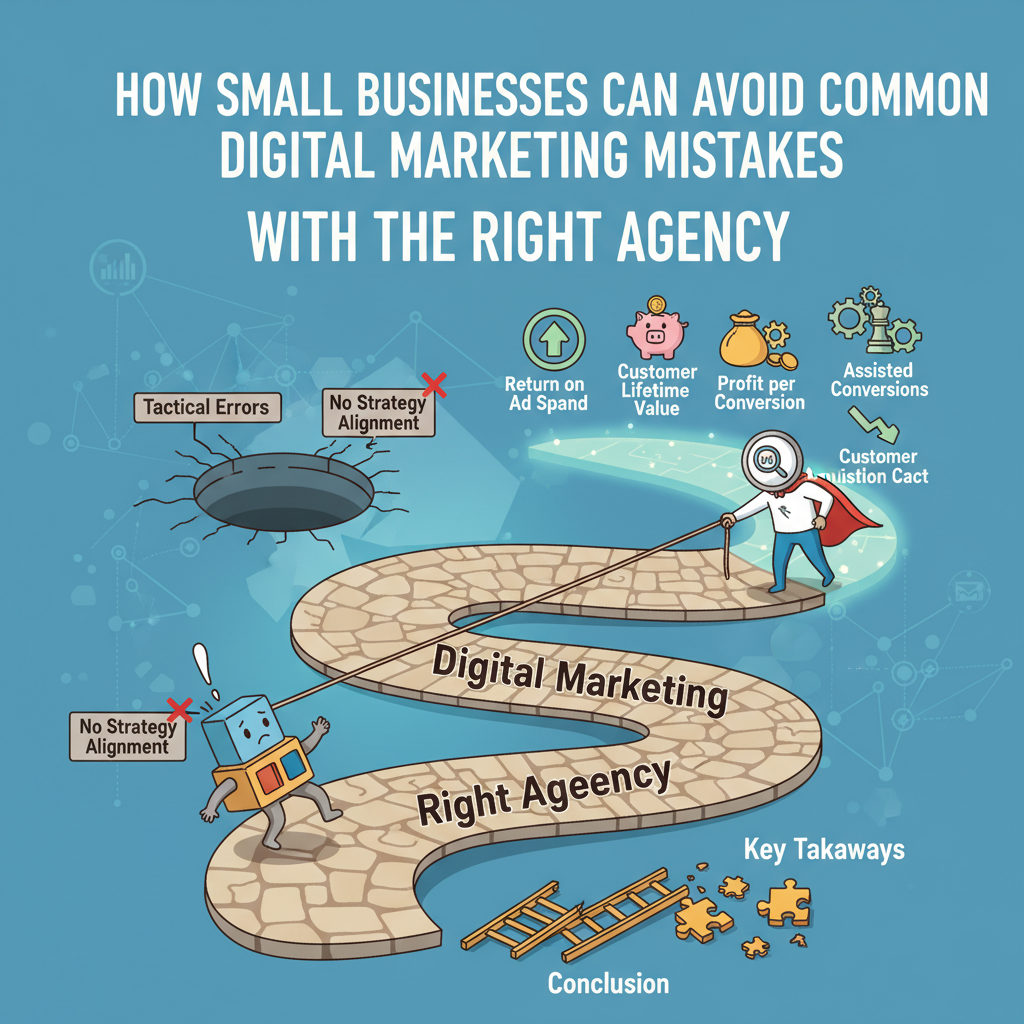
Let’s start with the nitty gritty, the hands-on mistakes that often lead to frustration. Think of these as the “oops, I dropped the ball” moments that can derail even the most enthusiastic digital marketing efforts. These aren’t necessarily strategic failures, but rather missteps in execution that compound over time.
One prevalent error is the “set it and forget it” approach to campaigns. Whether it’s social media ads or email sequences, digital marketing isn’t a static billboard; it’s a dynamic conversation. Ignoring analytics, failing to A B test ad copy or landing pages, and not optimizing bids can quickly turn promising campaigns into money pits. You might be running ads, but if they’re not being refined based on performance data, you’re essentially guessing in the dark.
Another common misstep is neglecting the customer journey. Many small businesses focus heavily on the “awareness” stage, getting eyes on their brand, but then drop the ball when it comes to nurturing leads or encouraging repeat business. A holistic digital strategy considers every touchpoint, from initial discovery to post purchase engagement, ensuring a smooth path.
Wrong channels
This is a big one. It’s like trying to sell ice cream in the Arctic, technically possible, but probably not the most efficient use of your energy. Many small businesses feel compelled to be everywhere online: Facebook, Instagram, TikTok, LinkedIn, Pinterest, Twitter, YouTube, you name it. While broad visibility sounds appealing, it often dilutes effort and budget.
The truth is, your ideal customers aren’t equally active on every single platform. A B2B service provider trying to generate leads primarily through TikTok might find themselves shouting into an echo chamber, while a local bakery trying to build community on LinkedIn might be missing their audience entirely. As highlighted by insights from the Meta Business Blog, understanding where your audience spends their time online and what kind of content they engage with is paramount.
The key here is strategic channel selection. Instead of spreading yourself thin, identify the 2 to 3 platforms where your target audience is most engaged and where your unique offering resonates best. Focus your energy, resources, and content creation there for maximum impact. A good agency doesn’t just suggest channels; they justify them with data and audience insights.
Strategy Alignment
Beyond the tactical blunders, a deeper issue often lies in a lack of strategic alignment. This isn’t just about what you’re doing, but why you’re doing it, and whether it actually serves your overarching business goals. Without a clear strategy, even the most perfectly executed tactics can feel like busywork, yielding little in terms of tangible results.
Think of strategy as your north star. It defines your target audience, your unique value proposition, your competitive landscape, and your measurable objectives. Many small businesses jump straight into “doing” digital marketing, running ads, posting on social media, without first defining these fundamental elements. This leads to disjointed efforts that don’t build on each other and often fail to move the needle where it truly counts: your bottom line.
A solid strategy ensures that every digital marketing activity, from a simple tweet to a complex email campaign, is working towards a common, measurable goal. It’s about understanding your customer’s journey, identifying their pain points, and positioning your business as the solution. This is where the expertise of a dedicated digital marketing agency for small business becomes invaluable. They can help you step back, assess the big picture, and build a cohesive plan.
When you’re considering partnering with an agency, treat it like an advisory checklist. Don’t just look for someone who promises “more likes” or “higher rankings.” Instead, look for an agency that:
- Asks Deep Questions: They should want to understand your business inside out, your market, your customers, and your long-term vision. If they jump straight to tactics without asking about your goals, that’s a red flag.
- Focuses on Measurable ROI: They should talk about conversions, lead quality, and customer acquisition costs, not just vanity metrics. How will their efforts translate into actual business growth?
- Offers Transparency: You should have clear reporting, regular communication, and a clear understanding of where your budget is going and what results it’s generating.
- Has Relevant Experience: While not always mandatory, an agency with experience in your industry or with businesses of similar size can hit the ground running more effectively.
- Prioritizes Education: A truly great partner will not only execute but also help you understand the “why” behind their strategies, empowering you with knowledge.
Finding the right partner isn’t about searching for the cheapest option or the one with the flashiest website. It’s about finding a team that aligns with your business values and can translate your objectives into a robust digital strategy. Insights from Think with Google consistently emphasize the importance of a customer-centric strategy that evolves with market changes and adapts to shifting customer behaviors and trends.
When you’re evaluating potential partners, consider what makes certain agencies stand out among the top digital marketing agencies. It’s usually their ability to blend creative thinking with data-driven decision-making, ensuring that every dollar spent is an investment, not just an expense. A good digital marketing agency for small business will be your strategic partner, helping you navigate the complexities of the digital landscape and avoid those common, costly mistakes.
Key Takeaways
- Small businesses often waste marketing spend due to tactical errors and a lack of strategic alignment.
- Avoid the ‘set it and forget it’ approach; continuous optimization based on data is crucial for campaign success.
- Don’t try to be everywhere; strategically choose 2-3 digital channels where your target audience is most active.
- A clear, measurable digital marketing strategy, aligned with business goals, is essential before execution.
- When choosing an agency, prioritize partners who ask deep questions, focus on ROI, offer transparency, and provide education.
Conclusion
Navigating the digital marketing landscape can feel daunting, but it doesn’t have to be a solo journey fraught with peril. By understanding common pitfalls and being proactive in seeking strategic partnerships, small businesses can transform their digital efforts from a source of frustration into a powerful engine for growth. The right agency isn’t just an executor of tasks; they’re an extension of your team, providing the expertise and foresight needed to build a sustainable, impactful online presence. Choose wisely, plan strategically, and watch your business thrive.