On average, a Chipotle burrito bowl can range from about 460 calories for a lighter build to well over 1,000 calories for a fully loaded option with double meat, rice, cheese, sour cream, and guacamole. Most typical bowls with rice, beans, one protein, salsa, cheese, and guacamole land roughly in the 650–950 calorie range, depending on ingredients and portion sizes.
What Counts as a Chipotle Bowl?
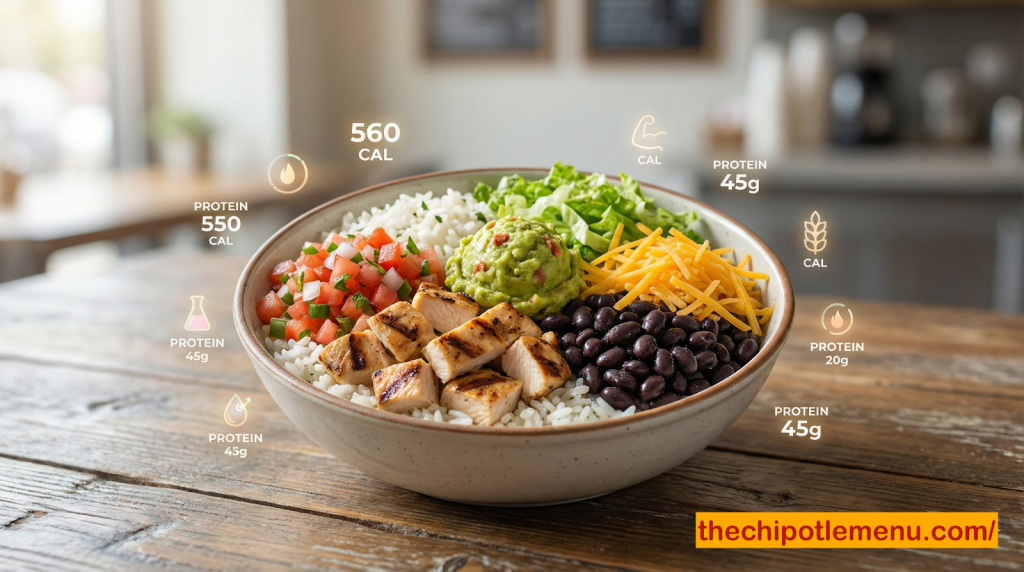
A Chipotle bowl is a customizable entrée built in a bowl instead of a tortilla, usually starting with rice and/or beans and then layered with protein, salsas, toppings, and extras. Because every ingredient is optional, two bowls can look similar but differ by several hundred calories. That is why understanding how each component contributes to the total is essential if you are tracking calories or macros.
Most bowls include some or all of these building blocks:
- Base: white rice, brown rice, beans, fajita veggies
- Protein: chicken, steak, barbacoa, carnitas, sofritas, or other seasonal meats
- Toppings: salsas, cheese, sour cream, lettuce, queso, guacamole
For those who enjoy comparing fast-casual options, checking out the full cook out menu reveals similar customization potential in burgers, chicken, and trays, though with a Southern twist focused on fresh, never-frozen ingredients.
Average Calories in Common Chipotle Bowls
Calorie counts vary with every customization, but some broad ranges are common across popular combinations. A moderate bowl with rice, beans, a single protein, salsa, and one higher-calorie topping typically falls in the mid-600s to mid-800s. Larger everything-on-it bowls, especially with double meat, cheese, and guacamole, often climb into the 900–1,200 calorie range.
Here are useful approximate ranges for typical bowl styles:
| Bowl type (typical build) | Approximate calories |
| Chicken bowl with rice, beans, salsa, cheese, guac | ~800–950 calories |
| Barbacoa or steak bowl with similar toppings | ~850–1,000 calories |
| Carnitas bowl with rice, beans, cheese, guac | ~900–1,050+ calories |
| Bowl without cheese and guac | Often 150–300 calories lower than a fully loaded version |
| Veg-forward bowl (extra veggies, limited rice, light toppings) | Commonly ~500–700 calories |
These ranges are estimates, not exact numbers, but they give a realistic picture of what most people get when they assemble a standard-sized bowl.
How Each Ingredient Adds Calories
Every layer in your bowl stacks calories on top of the previous one. Some ingredients are relatively light, while others are very energy-dense. Knowing which is which helps you fine-tune your order.
Key contributors in a typical bowl include:
- Rice: A normal scoop of white or brown rice is roughly in the 200+ calorie range. Asking for light rice can shave off a noticeable amount.
- Beans: Black or pinto beans usually add around 120–130 calories while contributing fiber and protein.
- Protein: A standard serving of chicken, steak, barbacoa, or carnitas tends to fall around 150–250 calories, depending on cut and fat content.
- Cheese and sour cream: Each is usually near 100–120 calories per serving, so using both adds a significant calorie bump.
- Guacamole: A full serving often sits around 200–230 calories, mostly from heart-healthy fats.
- Salsas and lettuce: Most tomato-based salsas add about 20–50 calories, and lettuce is typically 5–10 calories, making them high-flavor, low-calorie options.
If you stack rice, beans, cheese, sour cream, and guacamole on top of a protein, you build a calorie-dense bowl quickly, which can be helpful for some goals but not for others. For dessert lovers, options like cookout milkshake flavors offer a creamy, high-calorie treat to pair with lighter meals from chains like these.
Example Chipotle Bowl Calorie Breakdowns
Looking at sample builds makes the calorie impact of each ingredient easier to see. A balanced burrito bowl with chicken, brown rice, black beans, fajita veggies, mild salsa, cheese, and lettuce often lands around the mid-600-calorie range. This kind of bowl usually delivers strong protein around 50 grams or more, solid fiber, and a mix of carbs and fats.
A very simple bowl with chicken, a moderate portion of white rice, and a light amount of toppings can sit closer to the mid-400s to low-500s in calories, particularly if you skip cheese and guacamole. In contrast, a fully loaded chicken bowl with white rice, beans, cheese, sour cream, salsa, and guacamole often pushes up into the high-800s or more, mainly because of the layered starches and high-fat toppings.
These examples show that two bowls, both labeled chicken bowls, can differ by several hundred calories depending on toppings and portion sizes.
Lowest Calorie Chipotle Bowl Options
If you want a lighter bowl for weight loss or maintenance, the goal is to keep volume high but calories moderate. This usually means emphasizing vegetables and lean protein while dialing back energy-dense items.
Practical strategies for a low-calorie bowl include:
- Base: Skip rice entirely or ask for light rice and rely more on fajita veggies and beans.
- Protein: Choose a single portion of a lean protein, such as chicken or sofritas, instead of double meat.
- Toppings: Load up on tomato salsa, corn salsa in moderation, and lettuce, while using a small amount of cheese and either skipping guacamole or asking for a lighter scoop.
By making these choices, many people can keep their bowls in the 500–700 calorie range without feeling deprived, thanks to fiber from beans and veggies plus decent protein.
Higher Calorie and Bulking Bowls
For people trying to gain muscle or simply needing more calories for intense activity, a higher-calorie Chipotle bowl can be a convenient option. Here, the strategy is almost the opposite: keep the nutrient density high but do not shy away from extra carbs and fats.
To build a higher-calorie bulking bowl, you might:
- Ask for regular or extra rice and keep beans for additional carbs and fiber.
- Choose double meat like double chicken or double steak to significantly increase protein and total calories.
- Include cheese, sour cream, and guacamole, which add substantial fat and therefore energy, on top of the existing base.
With these tweaks, it is easy to reach 1,000–1,200+ calories in a single bowl, which can be helpful for people with high daily calorie needs.
Using Chipotle’s Nutrition Tools Like a Pro
Because Chipotle bowls are so customizable, the best way to know exactly how many calories are in your personal build is to use a trusted nutrition calculator. Chipotle offers an official online calculator where you can select the burrito bowl option and then add rice, beans, proteins, salsas, and toppings exactly as you would in the restaurant.
To get the most accurate estimate:
- Choose a burrito bowl as your entrée.
- Add each ingredient one by one, matching your usual portions as closely as possible.
- Note the total calories and macros: protein, carbs, and fat.
- Adjust ingredients, for example, remove cheese or swap to light rice, and watch how the totals change before you finalize your order.
While actual scoops in-store can vary slightly, the calculator gives a reliable baseline for planning and tracking.
How Chipotle Bowls Compare to Other Fast Food Meals
From a calorie perspective, a Chipotle bowl can sit in the same range as many fast food burgers and combo meals. The difference is in the composition: Chipotle bowls usually offer more protein, more fiber from beans and vegetables, and more room for customization.
A well-crafted bowl in the 650–800 calorie range that emphasizes beans, vegetables, and lean protein can fit comfortably into many daily calorie budgets while providing more nutritional value than many typical drive-thru meals. However, very large bowls that cross 1,000 calories can occupy a big chunk of someone’s daily intake, especially for people with lower energy needs, so it is important to balance the rest of the day’s meals and snacks accordingly.
FAQs About Chipotle Bowl Calories
How many calories are in a standard Chipotle chicken bowl?
A standard chicken burrito bowl with rice, beans, salsa, cheese, and guacamole often falls around 800–950 calories. Removing either cheese or guacamole typically reduces the total by about 100–200 calories, and removing both can bring the bowl closer to the 600–700 calorie range.
Which ingredients increase the calories the most?
Rice, cheese, sour cream, and guacamole are usually the biggest calorie drivers in a Chipotle bowl. Double meat also adds a lot of calories, though it boosts protein, which can be helpful if you are focused on muscle gain or athletic performance.
Are Chipotle bowls good for weight loss?
Chipotle bowls can absolutely fit into a weight-loss plan if you build them strategically. Focusing on lean protein, beans, fajita vegetables, and salsa while going light on rice and limiting cheese and guacamole helps keep the bowl in a calorie-deficit-friendly range without sacrificing fullness.
How do I quickly estimate my own bowl’s calories?
A quick method is to mentally assign rough values: about 200+ for rice, around 120 for beans, 150–250 for protein, 100–120 each for cheese and sour cream, and about 200 for guacamole. Add the low-calorie salsas and lettuce on top, and you will have a reasonable ballpark estimate even if you do not have the calculator open.
Do plant-based bowls have fewer calories?
Plant-based bowls are not automatically lower in calories. If you build a sofritas or veggie bowl with full portions of rice, beans, cheese, sour cream, and guacamole, it can be just as calorie-dense as a meat-based bowl. To keep a plant-based bowl lighter, emphasize vegetables and beans and use cheese and guacamole more sparingly.
Summary
The number of calories in a Chipotle bowl depends entirely on your ingredients and portion sizes, but most bowls fall somewhere between 460 and 1,200 calories, with many popular builds clustering around 650–950 calories. By understanding how each component contributes to your total, you can easily tailor your bowl for weight loss, maintenance, or muscle gain while still enjoying the flavor and flexibility that make Chipotle a go-to fast-casual choice.